ORDERING IN BULK? EXPLORE TRADE SERVICES
ORDER BY 1PM FOR NEXT DAY SHIPPING
COLLECT MON – FRI: 08:30 – 16:00 (15:00 FRI)
FREE STANDARD SHIPPING OVER £150
ORDERING IN BULK? EXPLORE TRADE SERVICES
ORDER BY 1PM FOR NEXT DAY SHIPPING
COLLECT MON – FRI: 08:30 – 16:00 (15:00 FRI)
FREE STANDARD SHIPPING OVER £150
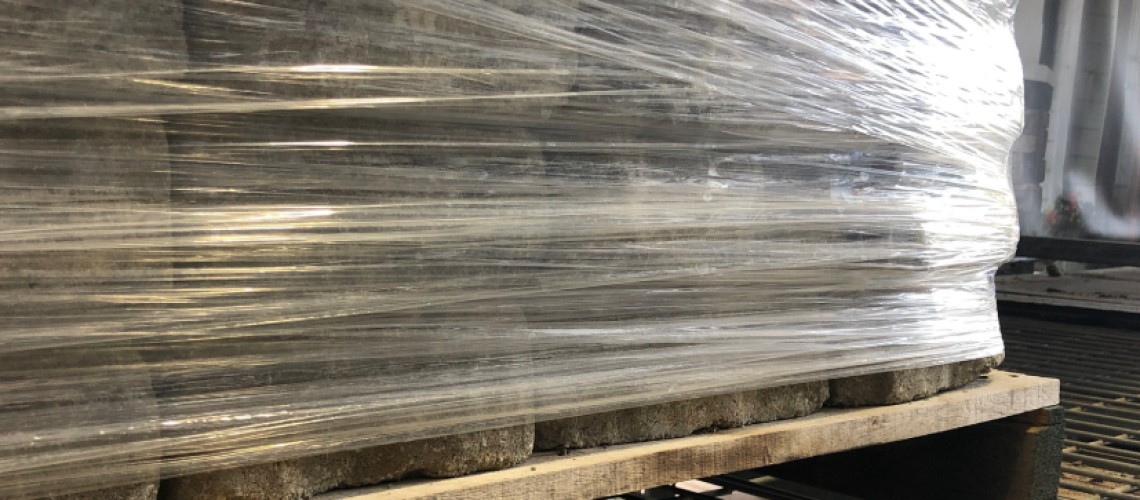
Wrapping pallets may seem like a simple task, but the technique and pallet wrap you use will affect the condition in which your goods arrive at their destination and the safety of couriers handling them.
Pallets that have been wrapped with uneven tension, or those that have not been secured to the pallet, will not survive shipping unscathed.
Read on to find out more about how to wrap a pallet properly and the best material to use for your job.
Pallets need wrapping correctly because the wrapping has several essential jobs to do:
Securely wrapped pallets will prevent your goods from moving around and reduce product damage. Damaged goods cost money as they will need to be returned and replaced.
Pallets that have not been securely wrapped with stability in mind can fall apart or tip, creating a hazard to workers in warehouses and carriers.
Pallets should be wrapped tightly to ensure that they are the minimum size possible without compromising the protection for the goods being shipped. Shrink wrapping pallets correctly will achieve this, allowing for storage space to be used efficiently and without incurring charges for extra space.
The right pallet for the right load will make both wrapping and handling much easier.
Ensure that your pallet load is the correct size for the pallet. If your pallet is too big, no amount of shrink-wrapping pallets will secure the load. If the pallet is too small, the goods may hang on the sides and run the risk of being damaged in transit.
Choose a pallet that is sturdy and in good condition. Pallets are made in different materials for different purposes. Plastic pallets are water-resistant and good for goods that need to be carried in clean conditions, as they can be easily cleaned down. Wooden pallets are robust and are often more environmentally friendly than plastic.
An average pallet will require around 54 metres of pallet stretch wrap.
Ensure that you put the larger items at the bottom of the pallet to create stability. Avoid any overhang at the sides.
Secure the load to the base of the pallet by strapping it with safety straps at least 4 times. Ensure that the straps are holding the load in place and that it does not move around when you move the pallet.
Circle your pallet, wrapping stretch wrap around at a consistent tension 3 – 4 times for each level of the load, working your way up in a spiral.
Ensure at least 50% overlap on each layer for maximum strength. If your load is very high, you may need to reinforce the top and anchor the load further by wrapping around the top to the base several times.
Edge protectors can be secured to the corners to prevent damage to fragile goods. Brown packaging tape can also be added to reinforce corners.
Test that the load is stable by trying to move it gently. Check that any important labels are still visible through the wrap and, if not, add more.
We offer two types of pallet wrap, also known as stretch wrap or shrink wrap.
This type of wrap is for pallets wrapped by hand. It is available as clear or black pallet wrap and can be used with our handy pallet wrap dispenser to make the job easier.
This wrap is used when pallets are wrapped by machine in high-volume environments.
You can read more about all our packaging materials here.
We stock a huge range of 100+ different packaging materials. Explore them today…